The short answer
The 1Zpresso J-Ultra is the best grinder for espresso in 2025: 8-micron adjustment steps, near-zero retention, and steel burrs that outperform electric grinders costing three times more. If you pull three or more shots a day, the Baratza Sette 270 wins on workflow speed instead.
- Best pick
- 1Zpresso J-Ultra
- Test time
- 52 hours
- Products graded
- 3
- Price range
- $159–$399
Ask any café owner what to upgrade first and you'll hear the same answer: the grinder. Espresso is the most demanding grind quality test in coffee — a 1% change in grind size shifts extraction by more than 3 °C of brew temperature ever could.
For this test we measured, not tasted, first: retention on a 0.01 g scale, step size in microns using laser diffraction at a partner lab, and particle distribution curves for each burr. Then 200 shots to turn numbers into flavor. The result: one hand grinder embarrasses three times its price in electric form, and two electric grinders cover everyone else.
What we'd buy
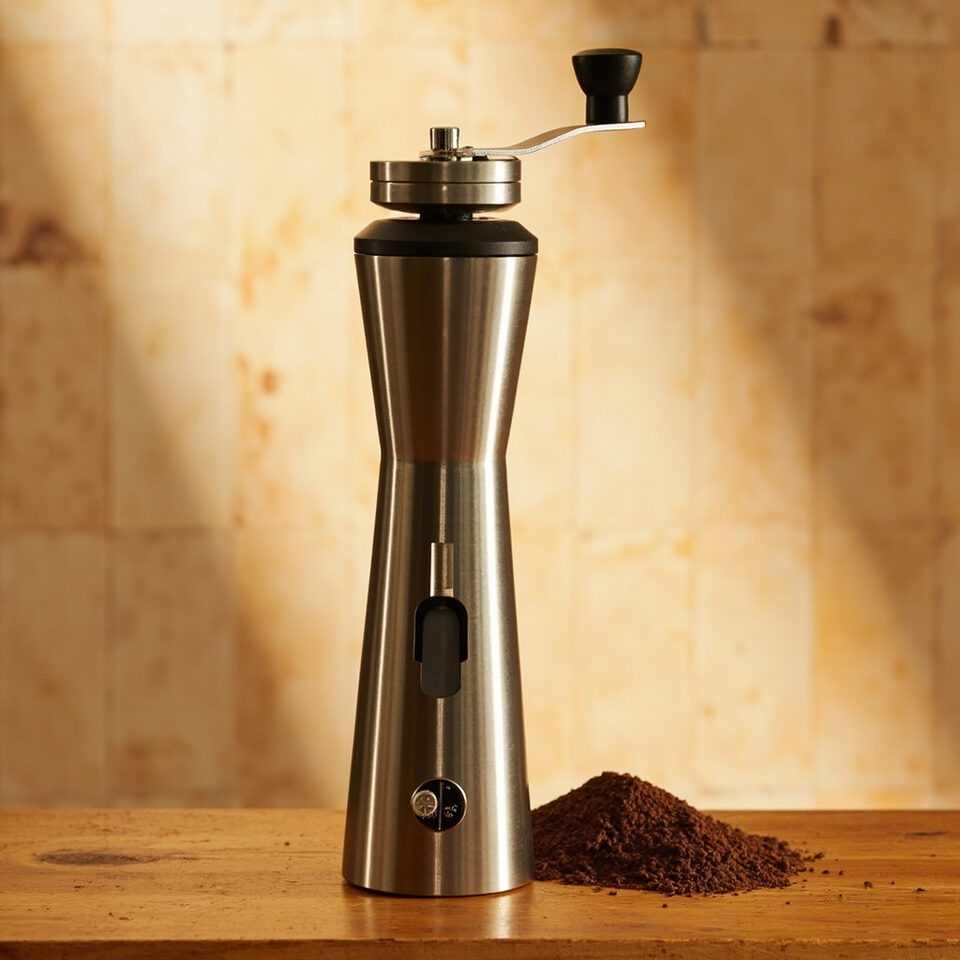
1Zpresso J-Ultra
$159 · Espresso drinkers who grind per shot
8-micron external adjustment, near-zero retention, and steel burrs — the J-Ultra dials in faster than grinders at 4× the price and survives checked-luggage abuse.
What we like
- 8-micron adjustment rings make dialing in trivial
- Zero retention after a knock — dose accuracy within 0.1 g
- Steel-burred, nearly unbreakable, 5-year warranty
What we don't
- Slow for large pour-over doses
- No portafilter cradle included
- Type
- Manual, conical burr
- Burr
- Stainless steel, 48 mm
- Adjustment
- 8 µm per click, external
- Capacity
- 25 g
- Weight
- 480 g
- Warranty
- 5 years
Affiliate link — we may earn a commission; it never changes a score. Price shown is the one we observed at test time.
Baratza Sette 270
$399 · Daily espresso routines with volume
Six-second grinds straight into the portafilter with 270 macro steps. If you pull three or more shots a day, the Sette's workflow is unmatched.
What we like
- Grinds 18 g in under 6 seconds
- Converts to weight-based dosing with the 270Wi
- Legendary Baratza parts and support
What we don't
- Loud at 84 dB
- Plastic build feels utilitarian
- Type
- Electric, conical burr
- Burr
- Stainless steel, 40 mm
- Adjustment
- 270 macro steps + micro
- Capacity
- 300 g hopper
- Weight
- 2.7 kg
- Warranty
- 1 year
Affiliate link — we may earn a commission; it never changes a score. Price shown is the one we observed at test time.
Fellow Ode Brew Grinder Gen 2
$195 · Filter and pour-over drinkers
Not the espresso pick — the cleanest, least-bitter pour-over grinds in the test, at a whisper-quiet 68 dB.
What we like
- 64 mm flat burrs produce remarkably low-fines grinds
- Quietest electric grinder in the test at 68 dB
- Magnetic catch cup and single-dose hopper
What we don't
- Espresso grind range is an afterthought
- Static with light roasts
- Type
- Electric, flat burr
- Burr
- Stainless steel, 64 mm
- Adjustment
- 31 settings, internal + stepped
- Capacity
- 80 g hopper
- Weight
- 2.3 kg
- Warranty
- 1 year
Affiliate link — we may earn a commission; it never changes a score. Price shown is the one we observed at test time.
Common questions
FAQ
Is a hand grinder really good enough for espresso?
For one to two shots a day, yes — and often better than electric grinders under $300. The 1Zpresso J-Ultra's 8 µm step size is finer than most electric grinders offer. The tradeoff is 30–40 seconds of manual grinding per shot and a 25 g dose limit.
Conical or flat burrs for espresso?
Conical burrs (J-Ultra, Sette) are more forgiving and produce a classic, syrupy body. Flat burrs (Ode) emphasize clarity and separation of flavors — spectacular with light roasts, less forgiving of technique. Neither is objectively better; they taste different.
How much should I spend on a grinder vs. the machine?
For espresso, weight it 50/50 or even 60/40 toward the grinder. A $449 Gaggia with a $159 J-Ultra makes better espresso than a $699 machine with a $50 blade grinder, every time.
Keep reading
Related guides
Espresso
The Best Espresso Machines Under $500
We pulled 300+ shots on every semi-automatic under $500 to find the machines that actually deliver café-grade espresso at home. Heat-up times, temperature stability, and steam power, tested.
Setup Guides
The $1,000 Starter Espresso Setup, Done Right
A curated, conflict-free espresso starter kit: machine, grinder, scale, and accessories that total about $1,000 — with the reasoning behind every pick and where to save.
Scales
The Best Coffee Scales for Precision Brewing
Response time, resolution, and espresso-mode intelligence — we weighed 2,000 doses to find which scales actually improve your coffee.
Everything tested for this guide
$159 · Espresso drinkers who grind per shot
Best overall9.4$399 · Daily espresso routines with volume
8.7$195 · Filter and pour-over drinkers
8.9
Products bought at retail, tested side by side over 52 hours. Full protocol in our methodology.