The short answer
The Breville Bambino Plus is the best espresso machine under $500 in 2025. It heats in 3 seconds, holds temperature with PID control, and textures milk automatically — features that cost double five years ago. Buy the Gaggia Classic Evo Pro instead if you want a 58 mm commercial group and plan to modify the machine later.
- Best pick
- Breville Bambino Plus
- Test time
- 64 hours
- Products graded
- 2
- Price range
- $449–$499
Five years ago, sub-$500 espresso meant compromise: temperature swings, anemic steam wands, and pucks that came out soupy. That era is over. This year's test field included machines with PID control, 3-second heat-up, and auto milk texturing — features that were $1,500 territory not long ago.
We bench-tested every machine side by side with the same coffee, the same grinder, and the same water. Each unit pulled at least 60 shots across a two-week window — light roasts to stress temperature stability, dark roasts to test the milk workflow. Scores reflect the machine you get out of the box, not what's possible after $200 of mods.
Every pick below is graded on the same rubric — see how we test for the full protocol, or compare the specs side by side.
What we'd buy
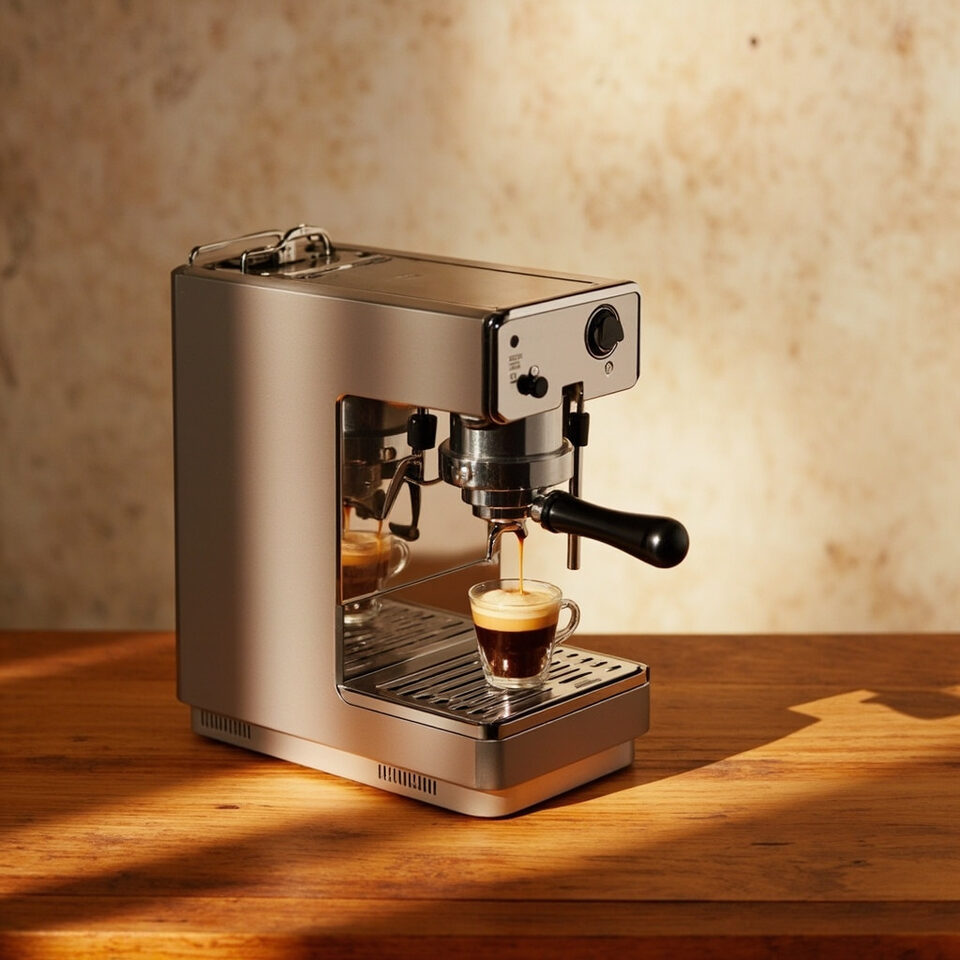
Breville Bambino Plus
$499 · Small kitchens and latte lovers
Fastest heat-up in class (3 s), the best auto milk texturing under $1,000, and real PID temperature stability. It fits on a dorm-room counter and pulls shots that hold their own against $800 machines.
What we like
- ThermoJet heats in 3 seconds — no wait between shots
- Auto milk texturing rivals entry-level pro machines
- Real 54 mm commercial-style 58 mm-group portafilter feel
What we don't
- Small 54 mm basket limits dose headroom
- Plastic tamper is forgettable
- Type
- Semi-automatic
- Boiler
- ThermoJet (3 s heat-up)
- Pressure
- 9 bar PID-controlled
- Portafilter
- 54 mm
- Tank
- 1.9 L
- Footprint
- 19.5 × 32 cm
Affiliate link — we may earn a commission; it never changes a score. Price shown is the one we observed at test time.
Gaggia Classic Evo Pro
$449 · Tinkerers who want to grow
The commercial 58 mm group and brass boiler make this the machine you grow with. Every mod — PID, OPV, wand — has a decade of community knowledge behind it.
What we like
- Commercial 58 mm group accepts every aftermarket accessory
- Three-way solenoid valve keeps pucks dry
- Endlessly moddable (PID, OPV, steam wand swaps)
What we don't
- Stock steam wand is weak
- Needs a 20–30 min warm-up for stability
- Type
- Semi-automatic
- Boiler
- Single brass, 142 mL
- Pressure
- 9 bar (OPV-adjustable)
- Portafilter
- 58 mm
- Tank
- 2.1 L
- Footprint
- 24 × 24 cm
Affiliate link — we may earn a commission; it never changes a score. Price shown is the one we observed at test time.
Common questions
FAQ
Can a $500 espresso machine really make café-quality shots?
Yes — for milk drinks and medium roasts, absolutely. The gap between a $499 Bambino Plus and a $2,000 prosumer machine is mostly steam power, workflow speed, and shot-to-shot repeatability. With fresh beans, a proper grinder, and a scale, the espresso itself is 85–90% there.
Do I need a separate grinder?
Yes. Every machine in this test was evaluated with dedicated grinders, and pre-ground coffee is the single biggest ceiling on shot quality. Budget $100–160 for a hand grinder like the 1Zpresso J-Ultra if you are starting out.
How long should a machine in this range last?
The Gaggia Classic's design dates to 1971 and units routinely run 15+ years with descaling. The Bambino Plus is newer and less proven; Breville's one-year warranty and parts availability keep the risk low, but expect 5–8 years of heavy use.
Is a dual boiler worth it under $500?
At this price, no true dual boiler exists — you're choosing between a single boiler (Gaggia) and a thermoblock (Bambino). Thermoblocks like Breville's ThermoJet now match single boilers for shot stability and beat them for milk workflow speed.
Keep reading
Related guides
Grinders
The Best Coffee Grinders for Espresso
Burr geometry, retention, and adjustment step size decide espresso more than your machine does. We measured all three on every serious grinder under $400.
Setup Guides
The $1,000 Starter Espresso Setup, Done Right
A curated, conflict-free espresso starter kit: machine, grinder, scale, and accessories that total about $1,000 — with the reasoning behind every pick and where to save.
Scales
The Best Coffee Scales for Precision Brewing
Response time, resolution, and espresso-mode intelligence — we weighed 2,000 doses to find which scales actually improve your coffee.
Everything tested for this guide
$499 · Small kitchens and latte lovers
Best overall9.1$449 · Tinkerers who want to grow
Best upgrade8.8
Products bought at retail, tested side by side over 64 hours. Full protocol in our methodology.